Social outcast
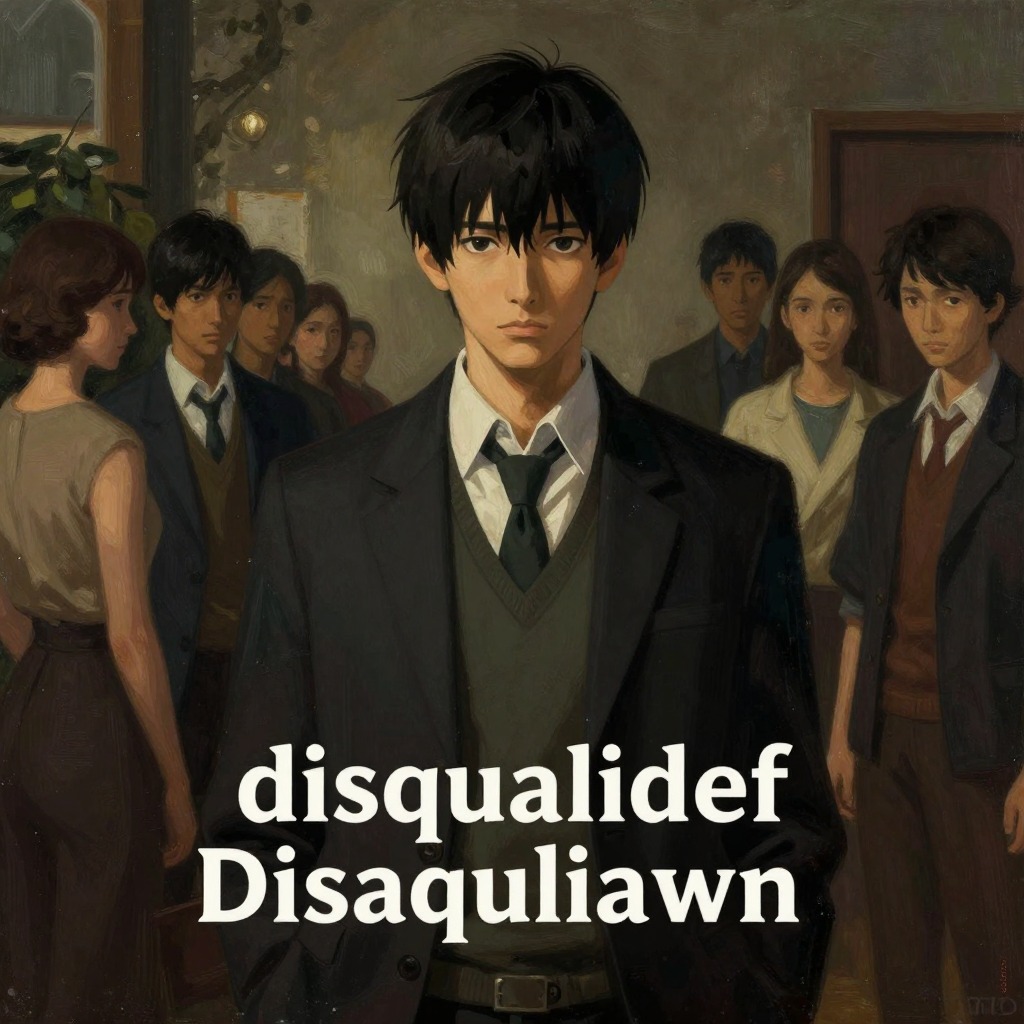
The state of being a "social outcast" is the defining condition of Yozo's existence, a self-aware and deeply internalized identity that shapes every aspect of his life from childhood to his final years. It is not a temporary circumstance but the fundamental lens through which he perceives himself and is perceived by others, a state of being that he articulates with devastating clarity: he has been a "social outcast" from the moment he was born. This conviction, that he alone is "entirely unlike the rest" of humanity, forms the bedrock of his chronic dread of human beings and his lifelong, desperate quest for a place in a world from which he feels irrevocably excluded.
Origins and Early Manifestations
Yozo's sense of being an outcast originates in his earliest childhood, long before any specific social rejection. He describes a fundamental inability to understand the basic mechanics of human life, such as the purpose of a station bridge or the necessity of eating, which he perceives as a grim ritual. This cognitive and emotional disconnect is compounded by a traumatic event: he is sexually corrupted by the maids and menservants in his home. Unable to confide in his parents, whom he cannot fully understand, he feels that any appeal for help would be futile, as the world would argue him into silence. This experience seals him off from the world of trust, forcing him to endure in silence and to develop his primary survival mechanism: clowning. This performance, a "last quest for love," is a desperate attempt to maintain a connection with human beings by making them laugh, thereby concealing his true, terrified self. He becomes an "accomplished clown," a child who never speaks a truthful word, and this role becomes his shield against the terrifying judgment of others.
The Internalized Identity and Its Consequences
As Yozo grows, the external label of "outcast" becomes a deeply internalized identity. He speaks of a "criminal consciousness" that has been his faithful companion since infancy, a wound that has grown to the bone and become dearer to him than his own flesh. This self-perception is not passive; it actively shapes his behavior and choices. He feels that he lacks the qualifications of a human being, a belief that makes him incapable of argument or self-justification. When criticized, he accepts the attack in silence, convinced he has been living under a dreadful misapprehension. This internalized shame is so profound that he feels a kinship with other designated outcasts—prostitutes, criminals, and the mentally ill—whom he regards with affection and a sense of shared fate. His attraction to the irrationality of the Communist movement stems from the same source: it offers a world outside the logic of "rational gentlemen," a space where his own disorientation feels less alien. The state of being an outcast also manifests in his physical decline. His hair turns prematurely grey after the trauma of his wife Yoshiko's violation, and by the age of twenty-seven, most people take him for over forty. His body itself becomes a marker of his exclusion from normal life.
The Path of Self-Destruction
Yozo's status as a social outcast is inextricably linked to a trajectory of self-destruction. His dread of human beings drives him to seek escape in alcohol, prostitutes, and later, morphine. These substances are not mere vices but tools for survival, allowing him to momentarily dissipate his fear. His suicide attempts—first with Tsuneko, then with an overdose of Dial sleeping pills—are direct consequences of his feeling that he cannot go on living. The first attempt is precipitated by the humiliation of having only three copper coins, a stark reminder of his poverty and his failure as a human being. The second follows the shattering of his last hope for a normal life after Yoshiko's trust is violated. His descent into morphine addiction is another form of escape, a desperate attempt to silence his insecurity and fretfulness, but it only deepens his degradation, leading him to copy pornographic pictures and have an affair with the crippled pharmacist. Each attempt at relief only reinforces his sense of being a "reject," a person for whom no recovery is possible.
The Final State: Withdrawal and the Loss of Self
The culmination of Yozo's life as a social outcast is his complete withdrawal from society. After his father's death, he is taken by his brother to a dilapidated house in a remote coastal village, where he lives with an ugly old servant named Tetsu. He has become a "reject" in the most literal sense, physically removed from the world. In this final state, he experiences a paradoxical numbness: he has lost even the ability to suffer. The news of his father's death "eviscerates" him, leaving the vessel of his suffering empty. He no longer feels happiness or unhappiness, only the passive observation that "everything passes." The epilogue, narrated by an unnamed observer, confirms this final judgment. The Madam of the Kyobashi bar, who knew Yozo, states flatly that when human beings get to that state, "they're no good for anything." Yet the same observer, after reading Yozo's notebooks, offers a final, contradictory verdict: "He was an angel." This epitaph, juxtaposed with Yozo's own self-portrait of shame and failure, underscores the tragic complexity of his status as a social outcast—a man who, in his complete vulnerability and lack of resistance, was perhaps too gentle for the world that cast him out.